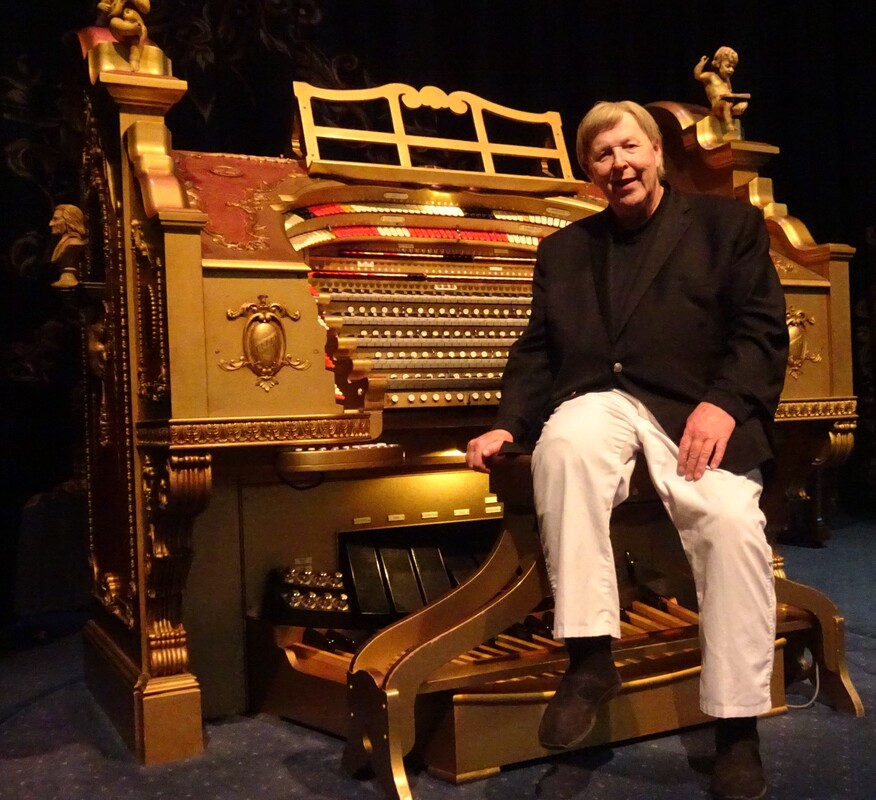
Jay Warren - Chicago's foremost photoplay organist - brings all the color, excitement, and glamour of the silent film era back to life with his original scores for the silver screen. As a regularly featured photoplay organist for the Silent Film Society of Chicago, he has accompanied most of the great silent films throughout his forty year career in his famous rousing style. He has been featured annually for the society's highly regarded Silent Summer Film Festival since its inception in 2000. Jay has appeared 16 times playing the huge E.M. Skinner pipe organ for silent films at the University of Chicago's famed Rockefeller Memorial Chapel. He also performs film accompaniment on the beautiful Letourneau pipe organ in the Crimi Auditorium of Aurora University. Jay has also made numerous silent film photoplay appearances on the incredible 5 manual Wurlitzer located at the Sanfilippo Foundation's Place de la Musique in Barrington Hills, Illinois..
Contact Jay: silentfilmsjaywarren@gmail.com 773-205-7372
Contact Jay: silentfilmsjaywarren@gmail.com 773-205-7372